
Africa ahead.
Listen. Understand. Act.
Home > News > In Benin, the Brazzaville Foundation Strengthens Institutional Dialogue on Falsified Medicines

Published on 24 August 2026 / Public Health

In Benin, the Brazzaville Foundation Strengthens Institutional Dialogue on Falsified Medicines
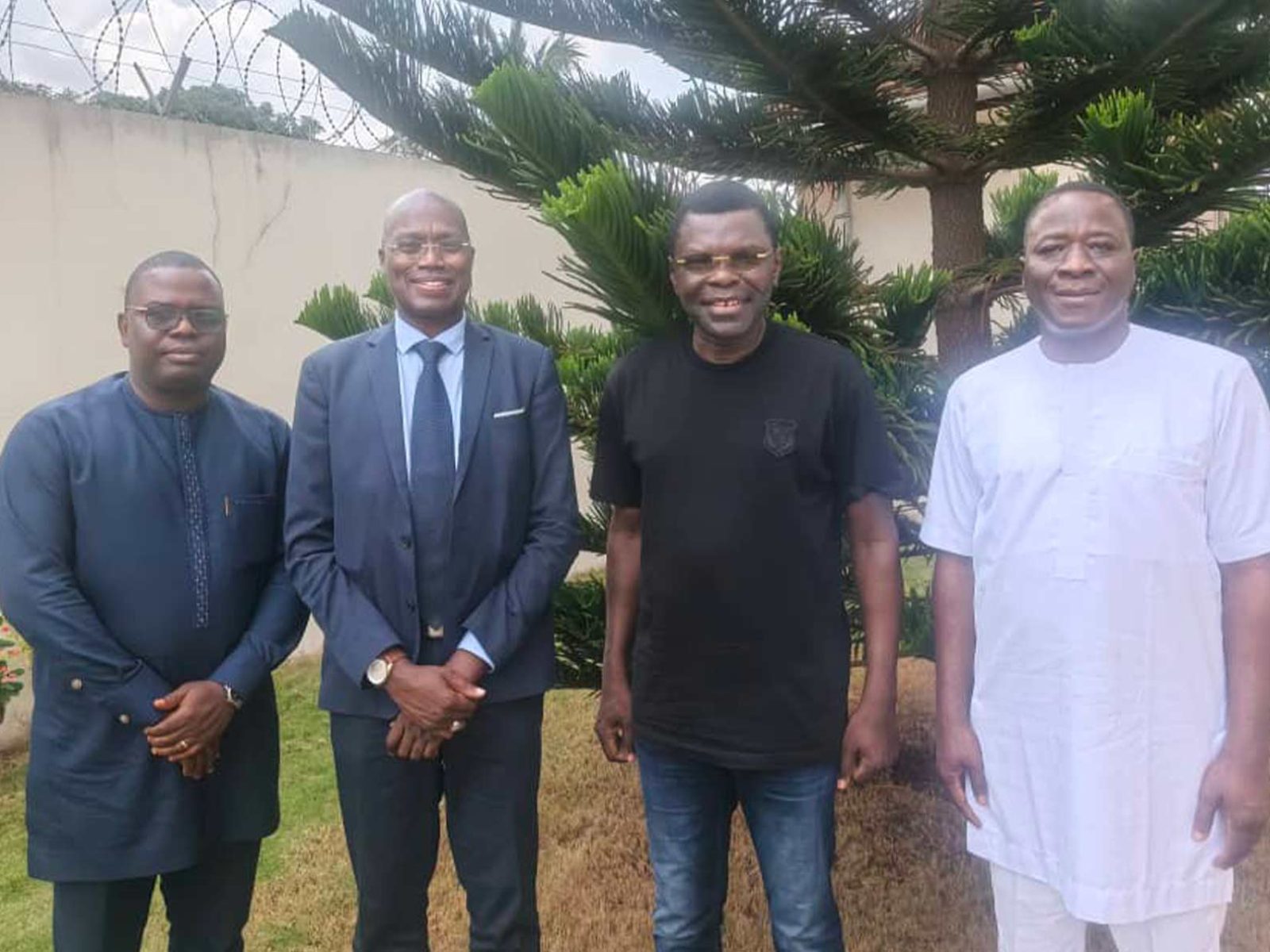
20260824-Benin

On 24 August 2026, a Brazzaville Foundation delegation was received by Professor Joseph Djogbénou, President of the National Assembly of Benin, for discussions on substandard and falsified medical products and on strengthening African cooperation in addressing this challenge.

Photo of the delegation from the “ Brazzaville Foundation ” received by Professor Joseph Djogbénou, President of the National Assembly of Benin, © Brazzaville Foundation.

A Brazzaville Foundation delegation led by its Director General, Foulo Basse, and accompanied by Dr. Éric Adja, President of the Francophone Agency for Artificial Intelligence (AFRIA), visited Cotonou for a series of meetings with Beninese authorities and institutions.


On August 24, 2026, the delegation was received by Professor Joseph Djogbénou, President of the National Assembly of Benin, among others.


The meeting provided an opportunity to discuss responses to the circulation of substandard and falsified medical products and ways to strengthen cooperation among African stakeholders in addressing a challenge that extends beyond national borders.

Engaging African Parliamentarians

Particular attention was given to the role that parliaments can play in this mobilisation. Among the initiatives discussed were awareness-raising activities for Beninese parliamentarians addressing the health, legal, economic and security implications of substandard and falsified medical products.


The possibility of encouraging exchanges among parliamentarians from several African countries, including Benin, Senegal and Togo, was also discussed. Such cooperation could facilitate the sharing of experience, strengthen cooperation between States and progressively foster greater convergence in national responses. In the longer term, this dialogue could also be developed at sub-regional level, including through engagement with the relevant ECOWAS institutions.

Strengthening African Capacity

Discussions also addressed several avenues for strengthening African capacities in pharmaceutical quality control and supply-chain security. Quality-control mechanisms, the mobilisation of African financing, training and the use of new technologies are among the areas being explored.


Artificial intelligence can notably provide complementary tools for data analysis, anomaly detection, product traceability and pharmaceutical supply-chain monitoring. Through its mission to Benin, the Brazzaville Foundation is continuing its dialogue with African institutions in support of a coordinated response bringing together political leaders, parliamentarians, health authorities, researchers, healthcare professionals and technology partners.


The objective is shared: to sustainably strengthen Africa’s capacity to protect populations against substandard and falsified medical products.